 Francis Hawkins
 An exothermic energy diagram visually represents the energy changes during an exothermic reaction, where the system releases heat to its surroundings. It shows the relative energy levels of reactants and products, illustrating the energy difference as a negative value. This diagram is a crucial tool for understanding the thermodynamics of exothermic processes, allowing for the visualization of energy released during chemical transformations. Analyzing such diagrams aids in predicting reaction spontaneity and calculating enthalpy changes. The graphical representation facilitates comprehension of complex chemical phenomena.
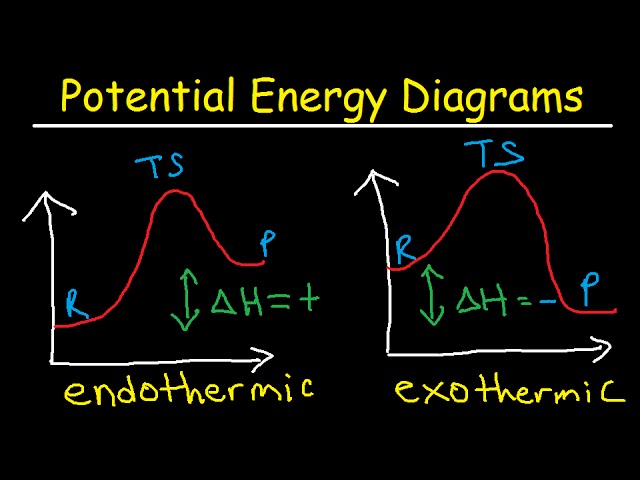
Exothermic energy diagrams are constructed using a vertical axis representing potential energy and a horizontal axis representing the reaction coordinate (progress of the reaction). The diagram shows the reactants at a higher energy level than the products, indicating the release of energy. The difference in energy between reactants and products represents the enthalpy change (H), always negative for exothermic reactions. Studying these diagrams helps to understand the activation energy, the minimum energy required for the reaction to proceed. The activation energy is represented by the energy difference between the reactants and the transition state.
Understanding the exothermic energy diagram is vital for grasping the thermodynamic principles governing many chemical processes, enabling accurate predictions about reaction behavior.
Understanding Exothermic Energy Diagrams
The construction of an exothermic energy diagram follows specific principles. The reactants are placed at a higher energy level than the products on the vertical energy axis. The reaction coordinate, plotted on the horizontal axis, represents the progress of the reaction from reactants to products. A peak represents the transition state, the highest energy point along the reaction pathway. The activation energy is the difference in energy between the reactants and the transition state, representing the energy barrier that must be overcome for the reaction to proceed. The difference between the energy of reactants and products represents the heat released during the reaction (H).
Detailed analysis of the diagram allows for a quantitative and qualitative understanding of the reaction. For example, a low activation energy indicates a fast reaction rate, whereas a high activation energy suggests a slower reaction. By observing the energy difference, one can immediately identify whether the reaction is indeed exothermic.
-
Identify Reactants and Products:
First, identify the chemical species involved in the exothermic reactionthe reactants and products. This step establishes the starting and ending points on the energy diagram. Accurate identification is crucial for correctly interpreting the energy changes. The chemical formulas will inform the energy levels of the reactants and products.
-
Determine Relative Energy Levels:
Next, establish the relative potential energies of the reactants and products. In an exothermic reaction, the products possess lower potential energy than the reactants because energy is released during the reaction. This is depicted by placing the products’ energy level below that of the reactants on the energy diagram.
-
Illustrate the Transition State:
Depict the transition state, representing the highest-energy point along the reaction pathway. This represents the activated complex and requires the activation energy to be overcome. The transition state’s energy level is placed higher than both the reactants and the products to show the energy barrier.
-
Label Activation Energy and Enthalpy Change:
Finally, label the activation energy (Ea), the energy difference between the reactants and the transition state, and the enthalpy change (H), the difference between the reactants and products’ energy levels. These labels are essential for a comprehensive understanding of the reaction thermodynamics. A negative H confirms the reaction’s exothermic nature.
Frequently Asked Questions about Exothermic Energy Diagrams
Exothermic energy diagrams are valuable tools in chemistry, but some questions frequently arise regarding their interpretation and application. Understanding these aspects is key to effectively using these diagrams for analyzing chemical reactions.
What does a negative H signify in an exothermic energy diagram?
A negative H in an exothermic energy diagram indicates that the reaction releases heat to the surroundings. The products have a lower potential energy than the reactants, meaning energy is lost from the system. This negative value quantitatively represents the amount of heat released. The magnitude of the negative H is a measure of the heat released, with larger negative values indicating greater heat release.
How is activation energy represented on an exothermic energy diagram?
Activation energy (Ea) is represented as the energy difference between the reactants and the transition state (the highest point on the energy curve). It shows the minimum energy required for the reaction to occur. Even though the overall reaction releases energy (exothermic), energy input is still needed to initiate the process. A lower activation energy implies a faster reaction rate.
How does an exothermic energy diagram differ from an endothermic one?
The key difference lies in the relative energy levels of reactants and products. In an exothermic diagram, products have lower energy than reactants, indicating energy release (negative H). In an endothermic diagram, products have higher energy than reactants, signifying energy absorption (positive H). The overall shape of the curve also reflects this difference; the product energy level is lower for exothermic reactions and higher for endothermic ones.
Exothermic energy diagrams provide a clear visual representation of energy changes in exothermic processes. Their accurate interpretation is crucial for comprehending the kinetics and thermodynamics of various chemical reactions.
The use of such diagrams allows for a simplified understanding of complex chemical systems. They are particularly beneficial for visualizing the energy changes involved in reactions.
Moreover, exothermic energy diagrams play a significant role in various scientific fields and applications.
Key Aspects of Exothermic Energy Diagrams
Understanding the key aspects of exothermic energy diagrams is crucial for accurate interpretation and application. These diagrams provide valuable insights into the thermodynamics of chemical reactions, offering both quantitative and qualitative information about the energy changes involved. Mastering these aspects enhances problem-solving capabilities in chemistry.
Energy Change (H)
This represents the overall energy change during the reaction. A negative H signifies an exothermic reaction where heat is released. The magnitude of the negative H indicates the amount of heat released. This is a fundamental aspect of understanding reaction spontaneity and energy balance.
Activation Energy (Ea)
This represents the energy barrier that must be overcome for the reaction to proceed. A lower activation energy means a faster reaction rate. This determines the reaction kinetics and the speed at which the reaction occurs. Factors influencing Ea include temperature and catalysts.
Reactant and Product Energies
These energy levels determine the H. In exothermic reactions, product energy is lower than reactant energy. This difference is visually represented by the vertical distance between reactant and product energy levels on the diagram.
Transition State
This represents the highest energy point along the reaction pathway. The energy difference between the reactants and the transition state is the activation energy. Understanding the transition state provides insights into the reaction mechanism and rate-limiting steps.
The interplay between these aspects provides a complete picture of the reaction’s thermodynamics and kinetics. This holistic view allows for more informed predictions and analyses of chemical processes.
These diagrams offer a powerful visualization method for understanding the fundamental principles underlying exothermic chemical reactions. Correct interpretation necessitates a clear understanding of energy levels, activation energy, and heat release.
Tips for Constructing and Interpreting Exothermic Energy Diagrams
Creating and interpreting exothermic energy diagrams accurately requires careful attention to detail and a thorough understanding of thermodynamic principles. These diagrams provide a visual representation of energy changes, so their construction must be precise to ensure correct interpretation.
Clear labeling and accurate representation of energy levels are crucial for avoiding misinterpretations. This precision ensures that the diagrams can be used effectively to gain insights into the reaction thermodynamics and kinetics.
Use a clear scale for the y-axis (energy).
Choosing an appropriate scale ensures that the differences in energy levels between reactants, products, and the transition state are accurately reflected. This allows for a clear visual comparison of energy changes. Ensure that the scale is large enough to show differences clearly.
Label reactants, products, and the transition state clearly.
Clearly identifying each component on the diagram is crucial for understanding the energy changes involved. Using appropriate chemical symbols and labels prevents confusion and ensures that the information conveyed is easily understood. Correct labeling eliminates ambiguity.
Accurately represent the activation energy (Ea).
Accurate representation of Ea is critical because it directly relates to the reaction rate. The difference in energy between the reactants and the transition state needs to be accurately measured. A well-defined Ea facilitates comparison of reaction rates.
Accurately represent the enthalpy change (H).
The H, reflecting the heat released, must be accurately shown. The difference between the reactant and product energy levels must be correctly represented. The value of H should be clearly labeled to indicate the magnitude of heat released.
Use a consistent scale for both axes.
Maintaining consistency in the scales used for both energy (y-axis) and the reaction coordinate (x-axis) ensures the accuracy and reliability of the information presented. This allows for accurate quantitative analysis and avoids distortion of information.
Exothermic energy diagrams serve as powerful visual tools for understanding energy changes. Their utility extends to various applications and allows for clear visualization of complex thermodynamic processes.
Precise construction and interpretation of these diagrams are crucial for accurate analysis of reaction kinetics and thermodynamics. They provide invaluable insights into the behaviour of exothermic chemical reactions.
Therefore, mastering the creation and interpretation of exothermic energy diagrams is essential for anyone studying or working with chemical reactions.
In conclusion, the exothermic energy diagram provides a valuable and intuitive method for understanding the energy changes involved in exothermic reactions, fostering a deeper comprehension of chemical processes and their thermodynamics.
Youtube Video: